
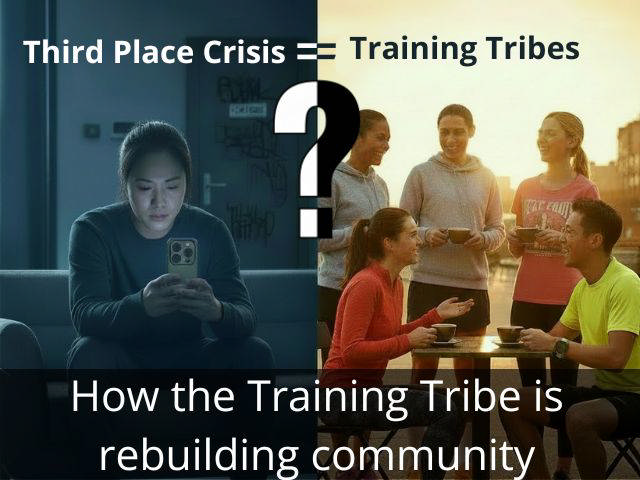
Third Place Crisis And The Rise Of The Training Tribes
By Lynn Munitich on 11 June 2026
Not too long ago, athletes trained for one thing: race day. The goal was simple. Put in the work, toe the start line, chase a personal best, and celebrate the result. While competition still drives many athletes, something beautiful has happened over the last few years. The social side of sport has exploded.
Today, joining a running club, cycling group, padel community, CrossFit box, swim squad, hiking crew, or weekend fitness group has become almost as important as entering the race itself. In some cases, it’s become even more important. Across every sporting discipline, athletes are discovering that the real magic isn’t only found at the finish line. It’s found in the conversations before sunrise, the post-workout coffee, the shared suffering during hard sessions, and the friendships built through consistent training.
We’re Wired for Connection
Humans are social by nature. For previous generations, social connection was often found in counter-culture movements, bonding over music, art, or shared political discontent in smoke-filled clubs, record stores, and bars. But today, the cultural hub has shifted.
Sociologists often talk about the decline of the "Third Place", those vital physical spaces outside of home and work where people gather just to exist together. As traditional third places like civic clubs and neighbuorhoods have faded, and as technology has left us hyper-connected yet deeply craving genuine face-to-face interaction, fitness groups have stepped into the vacuum. Sport has become the modern secular sanctuary. When you train alongside others, barriers disappear. Shared effort creates instant common ground. A tough interval session, a long ride into the wind, or a challenging gym workout creates a bond that social media simply can’t replicate.
The Megaphone and the Market
Of course, this modern movement doesn't exist in a bubble. Part of what feels like a massive global explosion is a mix of perception and clever design. Before the internet, if fifty people woke up at dawn to run together, only they knew about it. Today, social media acts as a megaphone—when those fifty people log their miles on Strava and share post-workout selfies on Instagram, it creates a powerful perception of a hyper-active, global movement.
Fitness brands and corporate sponsors have also realized that "community" is the ultimate product. The modern training tribe is often amplified by curated aesthetics and clever marketing, making us feel like we are purchasing an identity along with our running shoes. Yet, even if a brand is sponsoring the tent or an algorithm helped schedule the meetup, the high-fives at the end of a grueling set are entirely real. The commercialization might set the stage, but the human spirit fills it.
Performance Still Matters, But It’s Not Everything
Interestingly, athletes who join communities often end up performing better. Training with others pushes intensity, improves commitment, and exposes athletes to new ideas and perspectives. The collective energy of a group lifts everyone involved.
But what’s changed is that performance is no longer the only measure of success. Many athletes now judge a training session by how it made them feel, who they shared it with, and whether they enjoyed the experience—not just by the pace, watts, kilograms, or time recorded. Sport has evolved from being purely outcome-driven to experience-driven.
A Healthier Way to Belong
Every generation finds its own way to survive the complexities of youth and the search for belonging. While previous eras looked to escape the world through the rebellious, often self-destructive lens of late-night scenes and anti-establishment politics, today’s generation is trying something refreshingly different. They are choosing to rebel against isolation by pursuing longevity.
By trading the nightclub for the run club and hangovers for runner's highs, modern athletes are building communities rooted in vitality rather than fatigue. Ultimately, checking in on a friend's mental health over a morning trail run is simply an easier, kinder, and more life-affirming way to navigate the world.
Races will always matter. Personal bests will always be exciting. But the greatest triumph of modern sport is that we are no longer running alone in the dark. We are training for the people we get to share the journey with, proving that a healthier life isn't just better for the body, it makes the whole ride a lot more enjoyable.