
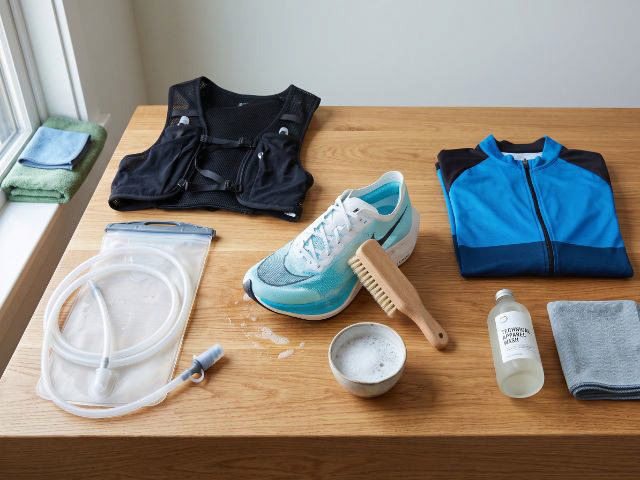
Extend The Lifespan of Your Gear with these Maintenance Hacks
By James Baxendale on 05 September 2026
Endurance sports are an investment. Between carbon-plated super shoes, aerodynamic cycling kits, and specialized hydration vests, the cost of your gear adds up quickly. But replacing worn-out equipment isn't just expensive; it can disrupt your training block. Proper maintenance doesn't just save you money, it preserves the biomechanical and moisture-wicking properties of your gear so you can perform at your peak.
Here is your definitive guide to keeping your high-performance equipment race-ready for longer.
1. Carbon-Plated Shoes: Protect the Foam
The magic of a super shoe lies in the delicate combination of the rigid carbon plate and the highly responsive, ultra-lightweight foam (like PEBAX). This foam is notoriously fragile.
- The Golden Rule: Never put running shoes in the washing machine or tumble dryer. Heat destroys the specialized foam compounds and melts the adhesives holding the shoe together, instantly killing the energy return.
- Routine Cleaning: Remove the insoles and tap the shoes together to dislodge dry mud. Wipe down the uppers with an old toothbrush, mild dish soap, and lukewarm water.
- Deep Cleaning: When your shoes are thoroughly trashed from a wet long run, outsource the heavy lifting. Drop them off at a professional service like The Sneaker Shack. They have the right tools to safely deep-clean technical fabrics without compromising the midsole foam.
- Decompression Time: Give your shoes 24 to 48 hours to "rest" between hard sessions. The foam needs time to fully decompress and regain its shape, so rotate them with a daily trainer.
2. Hydration Vests and Bladders: Defeating Mould
Nothing ruins a long trail run faster than a mouthpiece that tastes like mildew. Hydration systems require immediate attention post-workout.
- The Freezer Hack: The absolute best way to store your hydration bladder is in the freezer. After a run, rinse it out, empty the water, and toss the bladder and hose straight into the freezer. The freezing temperatures make it impossible for mould and bacteria to grow.
- Deep Cleaning Bladders: Once a month, use a baby bottle sterilizing tablet (like Milton) or a mixture of baking soda and lemon juice. Let it sit in the bladder and hose for 20 minutes, then rinse thoroughly.
- Washing the Vest: Sweat degrades the elastic in your vest. Take it into the shower with you after a run and hand wash it with a gentle, sports-specific detergent. Hang it to dry in the shade to prevent UV damage to the mesh.
3. Cycling Kits and Technical Apparel: Ditch the Softener
High-performance Lycra, elastane, chamois pads, and technical running caps rely on microscopic pores to wick away moisture and regulate your core temperature.
- Beat the Ammonia: Sweat contains ammonia, which eats away at elastic fibres over time. If you can’t wash your kit immediately, at least rinse it in cold water before throwing it in the laundry basket.
- Detergent Matters: Use a sport-specific wash (like Assos Active Wear Cleanser or a gentle local equivalent) that is designed to break down body oils.
- Zero Fabric Softener: Never use fabric softener. It leaves a waxy coating on the synthetic fibres, permanently clogging the pores, trapping odours, and destroying the breathability of the garment.
- Zip It Up: Always zip up your cycling jerseys and wash your kits in cold water. Open zippers act like tiny chainsaws in the washing machine, snagging and tearing delicate aerodynamic fabrics. Air dry in the shade to keep the elastic tight and responsive.
Take care of your gear, and your gear will take care of you on race day!