
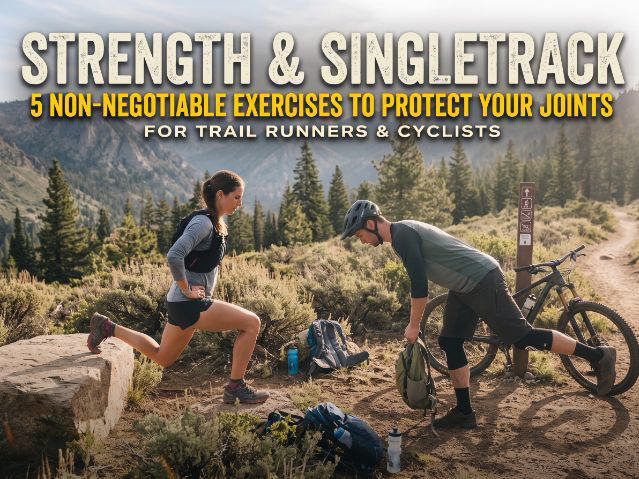
Strength and Singletrack: 5 Non-Negotiable Functional Exercises for Trail Runners and Cyclists
By James Baxendale on 09 October 2026
Whether you are grinding up a steep technical climb on the bike or navigating a rocky descent on foot, trail running and cycling place immense, repetitive demands on your joints. Because endurance sports happen almost entirely in the sagittal plane (moving forward and backward), the stabilizing muscles often get left behind, leading to joint pain and overuse injuries.
To build a resilient chassis that protects your knees, hips, and lower back, you need to incorporate targeted, functional strength work. Here are the top five exercises recommended by sports scientists, coaches, and physical therapists to bulletproof your joints for the trails.
1. The Bulgarian Split Squat (Rear-Foot Elevated Split Squat)
Often crowned the "king of runner's exercises" by sports coaches like Reece Roberts, the Bulgarian split squat is non-negotiable for building quad and glute strength while enforcing proper knee tracking.
According to Dr. Liz Letchford, an athletic trainer and coach, cycling and running are fundamentally single-leg sports. The Bulgarian split squat challenges your glutes, quads, and core simultaneously, mimicking the exact power output needed for a heavy pedal stroke or a steep uphill push, all while correcting the left-right imbalances that often lead to patellar tendon pain.
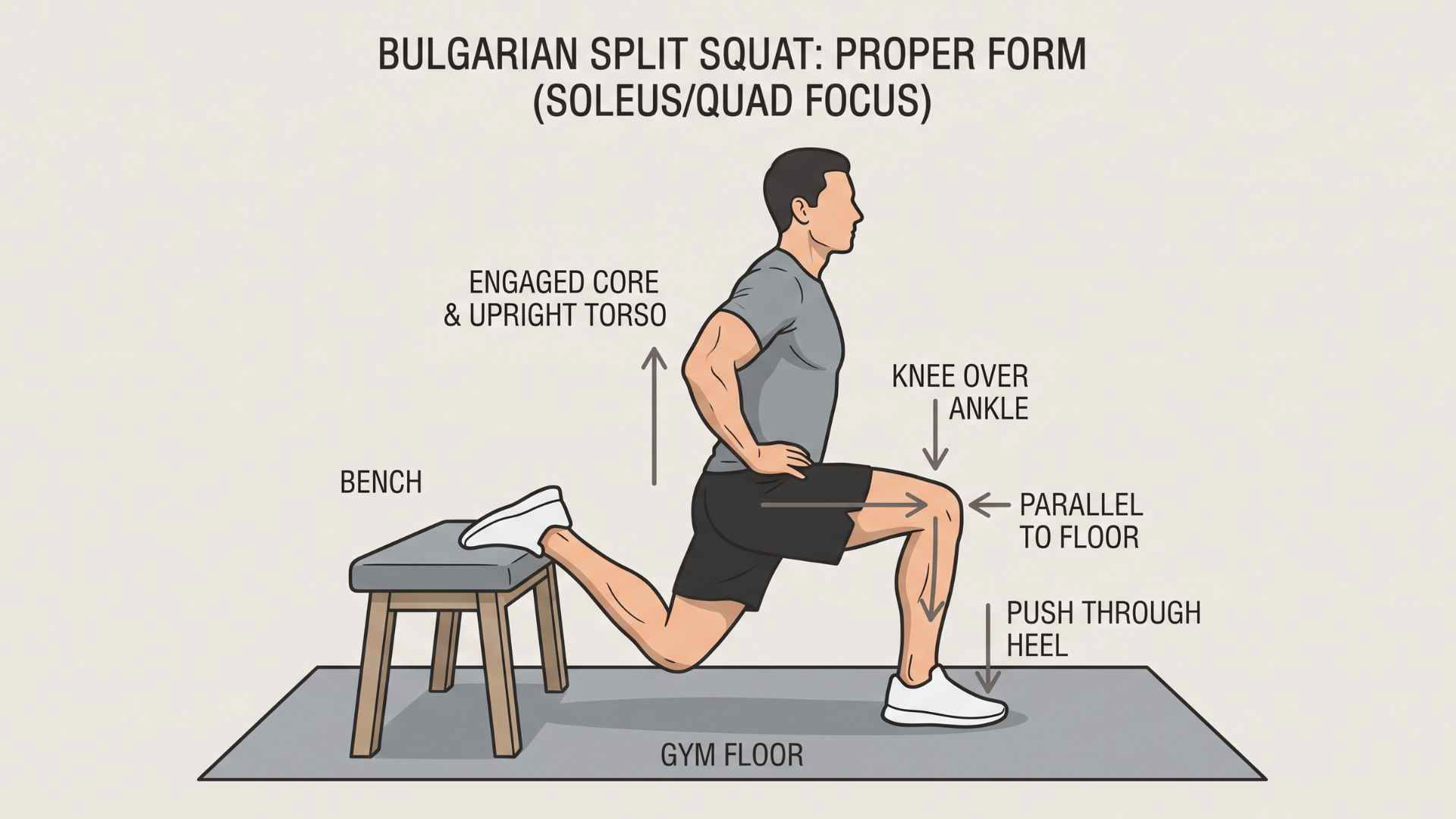
How to do it: Place your rear foot on a bench or step. Keep your front foot planted flat. Lower your hips until your front thigh is parallel to the floor, ensuring your front knee tracks cleanly over your toes without collapsing inward. Drive back up through the front heel.
2. Single-Leg Romanian Deadlift (RDL)
A strong posterior chain (hamstrings, glutes, and lower back) acts as the braking system for your joints, especially during steep, technical running descents.
Dr. Jordan Prunty, a Doctor of Physical Therapy, highly recommends the single-leg RDL because it drives hip internal rotation and builds massive stability in the posterior chain. A lack of hip control often forces the lateral thigh and knee to compensate, resulting in outer knee pain. By mastering the single-leg RDL, you build the kinesthetic awareness and hamstring capacity required to absorb shock safely.
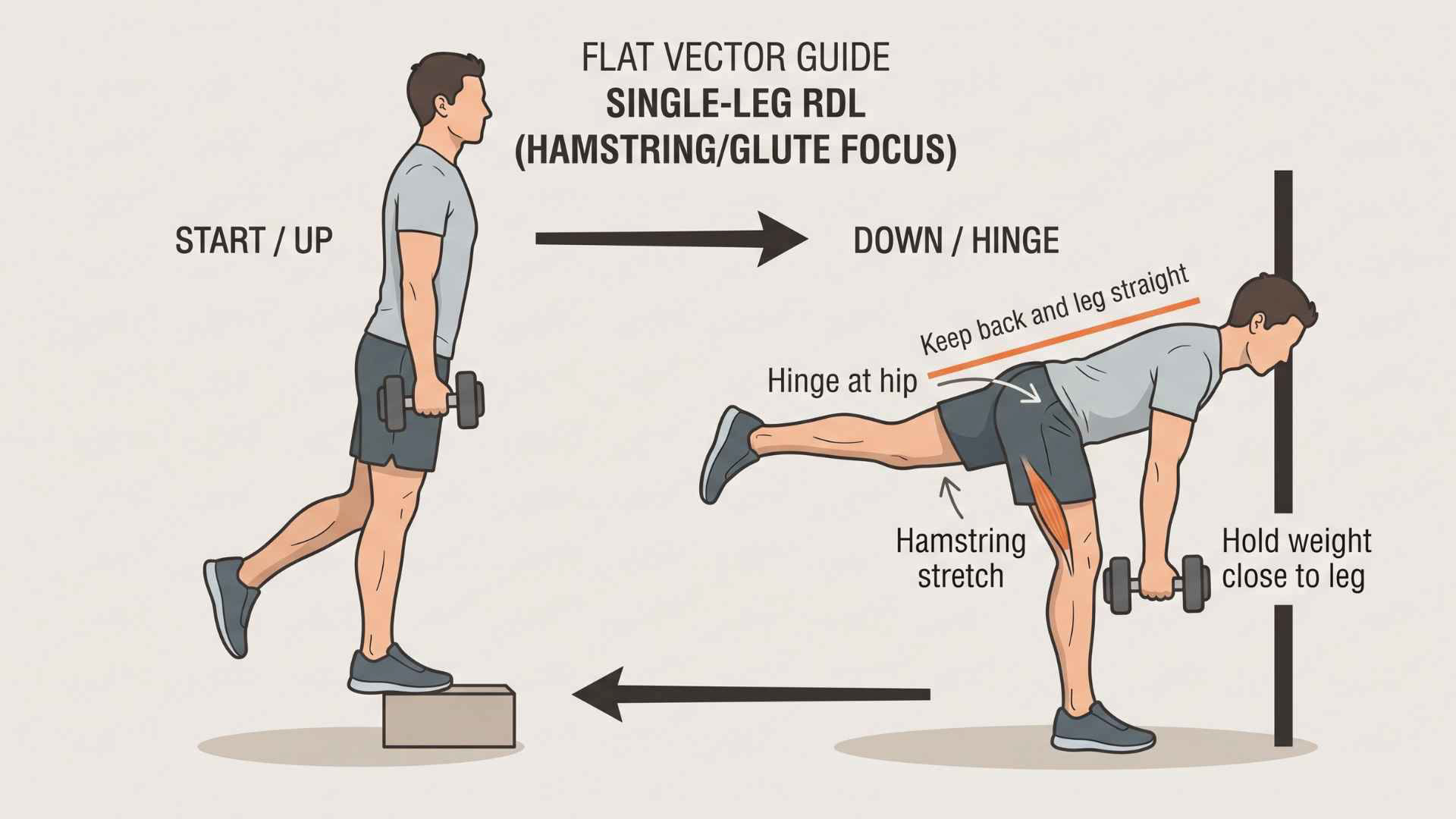
How to do it: Stand on one leg with a slight bend in the knee. Hinge at the hips, sending your free leg straight back while keeping your back perfectly flat and your pelvis square to the floor. Pull yourself back to standing using the glute and hamstring of your planted leg.
3. The Deadbug
A rigid, stable core is what allows a cyclist to transfer power from the upper body into the pedals without leaking watts, and it keeps a trail runner upright over uneven terrain.
Chris Schwenker, a physical therapist and cycling coach, points out that the Deadbug is superior to standard crunches because it promotes total core stability without forcing the spine into flexion. It trains the body to move opposing limbs in tandem (much like running and pedalling) while keeping the lower back anchored and protected from strain.
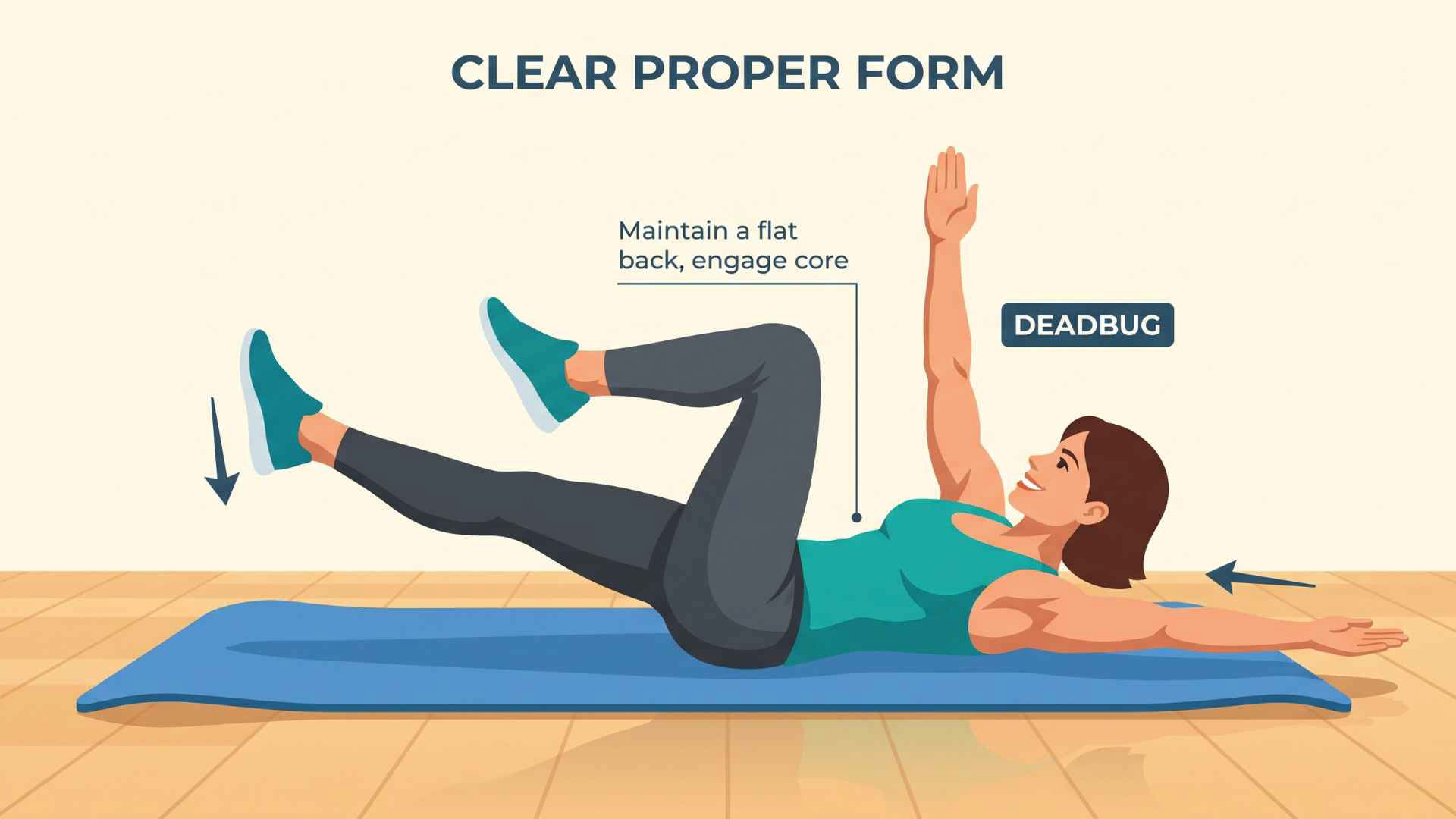
How to do it: Lie on your back with your arms pointing to the ceiling and knees bent at 90 degrees. Press your lower back firmly into the floor (do not let it arch). Slowly lower your right arm and left leg toward the floor until they hover just above it. Return to the centre and switch sides.
4. Bent-Knee Calf Raises (Soleus Focus)
Most athletes train their calves with straight legs, which primarily targets the gastrocnemius (the upper calf). However, endurance coaches and biokineticists stress that it is actually the deeper soleus muscle that acts as the primary shock absorber for the Achilles tendon and the ankle joint.
Sports rehabilitation experts note that the soleus is highly active during endurance cycling and is responsible for absorbing massive loads during a mid-foot running strike.
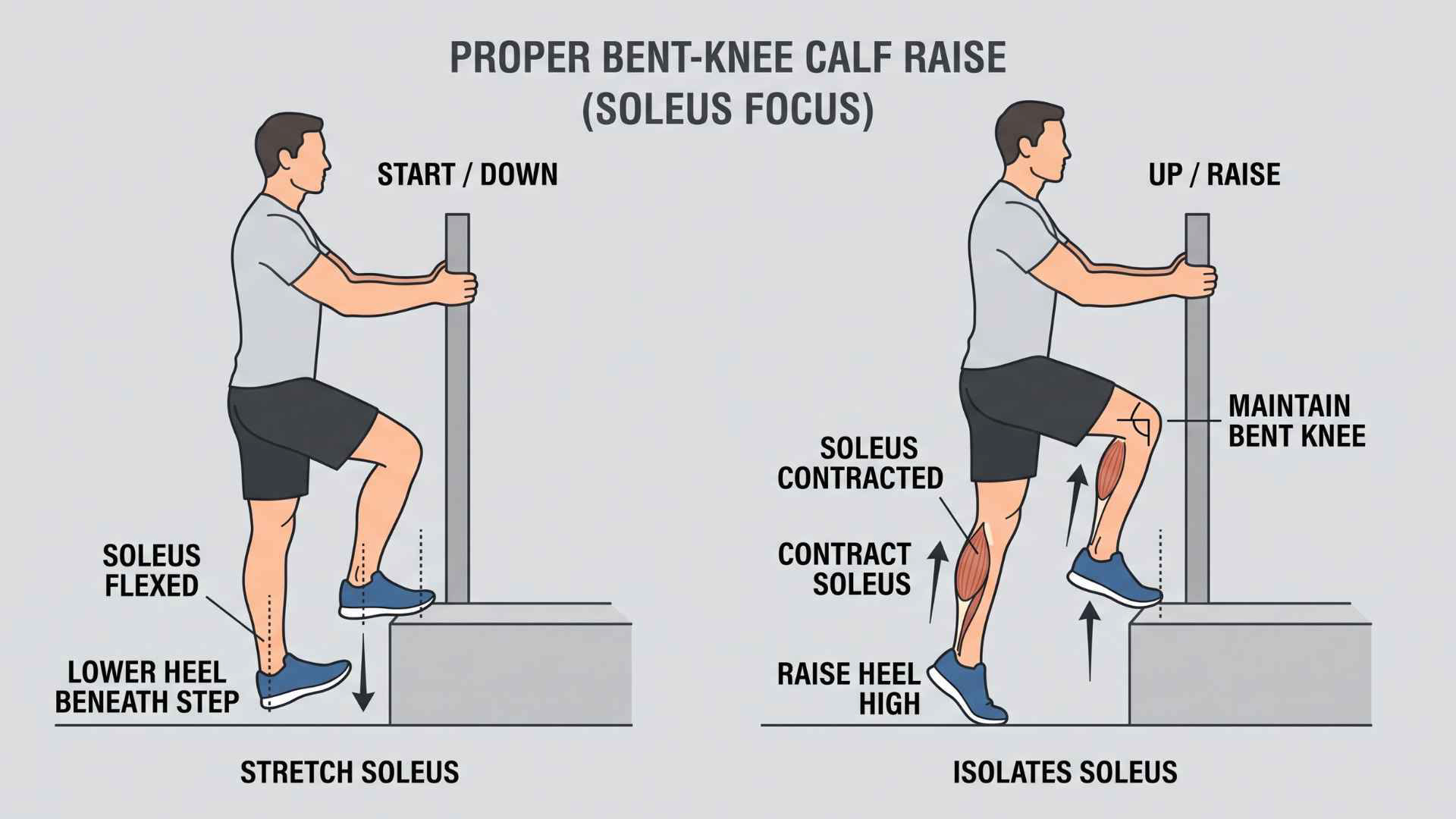
How to do it: You don't need a seated calf machine to do these at home. Stand on the edge of a step and bend your knees to about a 30-degree angle. Holding that bent-knee position, rise up onto your toes, then slowly lower your heels below the step. The bent knee takes the larger gastrocnemius out of the equation, forcing the soleus to do the heavy lifting.
5. Lateral Lunges (Cossack Squats)
Because endurance athletes move almost exclusively forward, the muscles that move the body side-to-side (the frontal plane) become weak. This is a primary driver of Iliotibial (IT) Band Syndrome, a notoriously stubborn injury for both runners and cyclists.
Integrating lateral lunges strengthens the gluteus medius and hip abductors. As noted by physical therapists and running coaches, training laterally builds the side-to-side resilience needed to rapidly change direction on technical singletrack, preventing the hips from dropping and the knees from caving inward under fatigue.
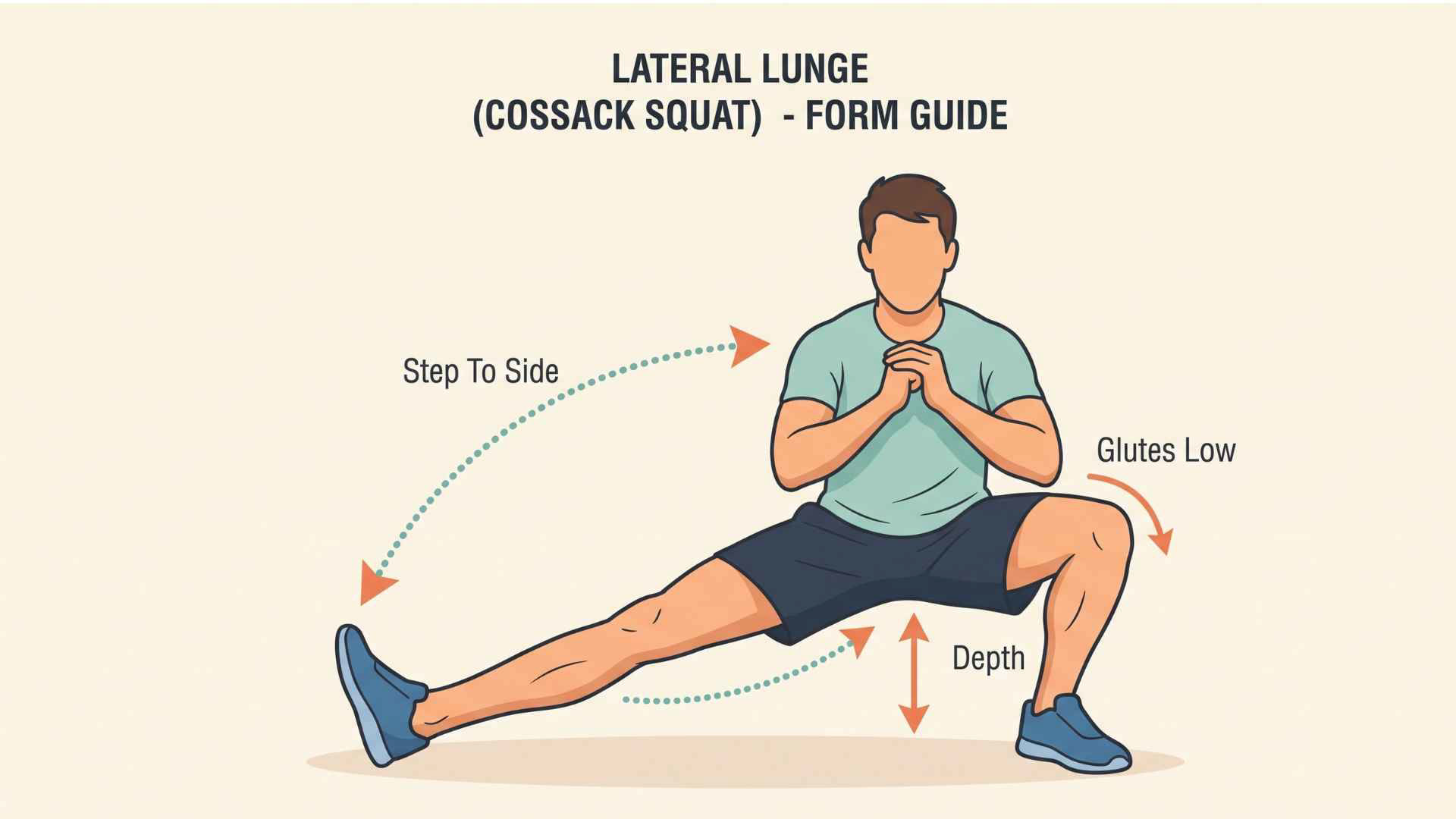
How to do it: Stand tall, then take a wide step to your right. Hinge your hips back and bend your right knee, keeping your left leg completely straight. Push explosively off your right foot to return to the starting position.
Adding just 20 minutes of these functional movements to your routine twice a week can drastically reduce your injury risk, improve your power output, and keep you out on the trails longer.