
Cut recovery times between weekend long runs with these local whole-food anti-inflammatories
By James Baxendale on 31 October 2026
Back-to-back weekend long runs are a cornerstone of ultra-endurance training, but the physical toll of a heavy Saturday trail session followed by Sunday base miles can leave your legs feeling entirely empty. While acute inflammation is a natural and necessary response to muscle damage, signalling the body to rebuild stronger tissue. Chronic, lingering inflammation significantly delays your recovery and ruins your subsequent workouts. Rather than reaching for over-the-counter NSAIDs that can mask pain and potentially upset your gut lining, you can actively reduce excessive inflammation by incorporating specific, locally available whole foods into your immediate post-run nutrition.
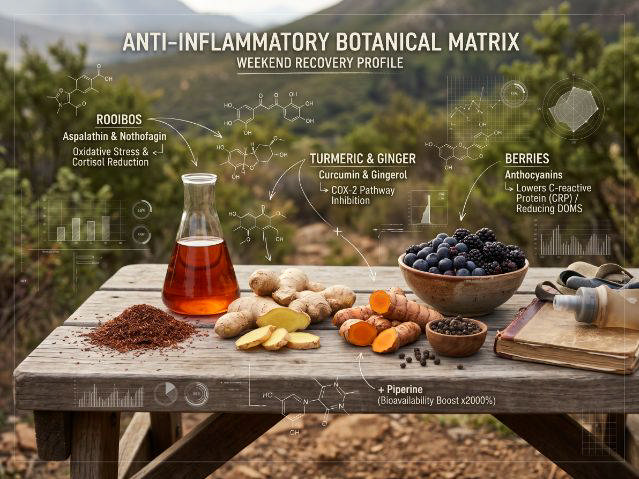
One of the most effective and accessible anti-inflammatory bases for South African athletes is Rooibos. Native to the Cederberg region, Rooibos is uniquely rich in two potent antioxidants: aspalathin and nothofagin. Sports nutrition research demonstrates that consuming Rooibos post-exercise directly lowers cortisol levels and reduces oxidative stress in fatigued muscle tissue. Brewing a strong batch, chilling it overnight, and using it as the liquid base for your post-run recovery smoothie is an effortless way to flood your system with these recovery-enhancing compounds.
When it comes to directly targeting the pathways responsible for delayed onset muscle soreness (DOMS), ginger and turmeric are functional powerhouses. Turmeric contains curcumin, while ginger is rich in gingerol. Both compounds have been scientifically proven to act on the COX-2 inflammatory pathways, the exact same pathways targeted by standard ibuprofen, to reduce swelling and perceived muscle pain. Because curcumin has notoriously low bioavailability on its own, it must be paired with black pepper (piperine), which increases its absorption by up to 2,000%. Fresh ginger and turmeric roots are easily sourced from local grocers like Food Lover's Market, making them perfect additions to your recovery meals or juices.
Finally, consider the role of anthocyanins, the dark pigments found in tart cherries and local berries. Clinical studies on endurance athletes show that high anthocyanin intake significantly lowers C-reactive protein (CRP) markers, a primary indicator of systemic inflammation. While imported tart cherry juice can be expensive, locally grown blueberries and blackberries offer a comparable, cost-effective anthocyanin profile to help clear inflammatory markers before your next session.