
The world of alternative endurance fuels and why sustainable proteins might be the missing link in your mid-race nutrition
By James Baxendale on 31 October 2026
For decades, the standard playbook for endurance fuelling has been universally simple: carbohydrates, and lots of them. Whether navigating a technical trail run in the Cradle or pushing through a long-distance gravel ride, athletes have relied on a steady stream of sticky gels and sugary chews. While these rapidly absorbing carbs are lifesavers for short bursts, relying on them exclusively during extended events often leads to flavour fatigue, gastrointestinal distress, and muscular breakdown. The landscape of endurance nutrition is shifting, moving beyond the sugar spike to embrace highly efficient, sustainable, and locally sourced alternative fuels that can be consumed mid-race without destroying your stomach.
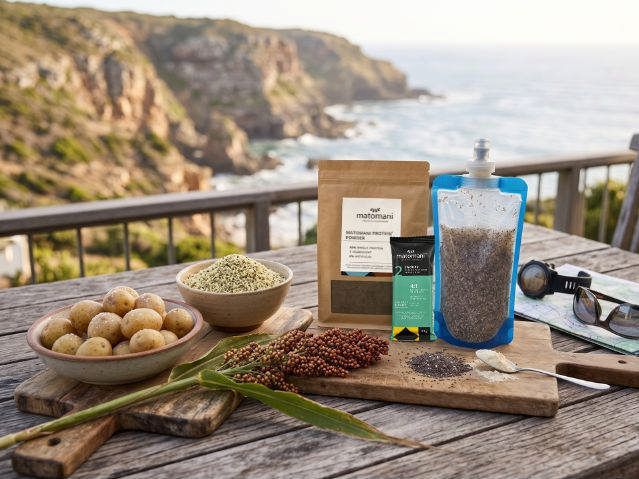
During ultra-endurance efforts, your body needs amino acids to repair muscle tissue on the fly. Traditional whey or heavy plant isolates are notoriously difficult to digest while blood is diverted away from your gut. Insect-based protein, particularly native sources like organic Mopani worms, offers a complete, bioavailable amino acid profile that requires significantly less metabolic energy to process. Functional athletic products formulated from this, such as Matomani protein powders and bars, which you can source directly through their online store, deliver essential amino acids, iron, and calcium without the heavy bloat.
When you need to stabilize blood sugar without the synthetic spike of maltodextrin, Sorghum (Mabele) provides a drought-resistant, low-glycemic carbohydrate base. For late-stage racing when your palate rejects anything sweet, salted baby potatoes are a savoury lifesaver providing easily digestible complex carbs. Both are easily found during your regular grocery run at local supermarkets like Checkers or Food Lover's Market.
For sustained fat-oxidation and hydration management, seeds and fruits are practical game-changers. Hemp seed hearts pack a dense punch of healthy fats and protein, delivering around 55 calories and nearly 5 grams of fat per 10-gram serving. Because they are dry and a potential choking hazard on the trail, don't eat them raw. Instead, blend them with pitted dates and sea salt into bite-sized energy spheres, or mix them into a reusable baby-food squeeze pouch with mashed sweet potato for a savoury paste. You can stock up on premium hemp hearts at Dis-Chem or Wellness Warehouse.
Finally, rethink your liquid calories by adapting one of the oldest endurance traditions in history: the Tarahumara indigenous ultra-runners' iskiate (a simple mix of chia seeds, water, and lime juice). For a localized African upgrade, swap the lime juice for wild-harvested baobab powder, often found at artisan vendors or online. While lime offers a minor hit of vitamin C, baobab is a functional powerhouse. It delivers roughly 2,250mg of potassium per 100g compared to lime's measly 117mg, alongside massive boosts in magnesium and calcium to effectively combat oxidative stress and muscle cramping.
How to prep it: Mix one to two tablespoons of chia seeds and a tablespoon of baobab powder with water or coconut water in a 250ml or 500ml front-vest soft flask the night before your event. The chia seeds absorb the liquid, creating a slick, slow-release hydration gel that goes down easily without chewing, while the baobab adds a tart, citrusy zing that cures palate fatigue.
Integrating these sustainable alternatives isn't about abandoning your carbohydrate regimen; it is about strategic layering. Adding these localized, whole-food fuels to your vest provides the sustained, slow-burn energy required to push through the final miles.