
How Your Running Club Can Bankroll Its Next Major Event
By James Baxendale on 07 November 2026
Organizing a race event is a massive leap from coordinating weekly club runs, transforming a community gathering into a full-scale logistical operation. When a running club decides to host a formal race, the committee quickly realizes that entry fees alone rarely cover the true cost of execution. The financial burden shifts from simple club subscriptions to funding a complex matrix of operational necessities. This requires a fundamental change in how the club approaches funding, moving away from seeking a single charitable donation to building a strategic coalition of sponsors who collectively bankroll the event.
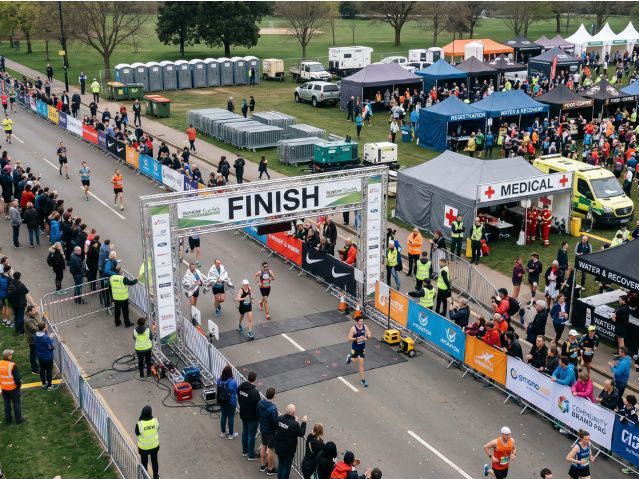
Putting an event together involves far more than marking a route and setting up a finish line banner. The treasurer and organizing committee must budget for a mountain of non-negotiable expenses that runners never see. Securing the venue often requires municipal permits, noise exemption clearances, and sometimes trail access fees or road closure coordination. Crucially, the club must procure comprehensive public liability insurance to protect the organizers, the landowners, and the participants against unforeseen accidents. On top of that, there are significant costs for professional medical standby teams, electronic timing systems, traffic management, portable ablutions, and waste removal. When you add all this up, the break-even point skyrockets, making it impossible to rely on a single local business to foot the entire bill.
To cover these extensive costs, the marketing manager needs to construct a modular sponsorship portfolio, breaking the event down into distinct, sellable assets that appeal to different sectors. Instead of asking one brand for everything, you pitch specific opportunities to specific industries. For instance, a water or sports drink company isn't just asked for a logo placement; they are pitched the exclusive rights to the hydration zones and the finish line recovery area, giving them direct product-in-hand engagement with exhausted, thirsty athletes. This covers the logistical cost of race hydration while fulfilling the fast-moving consumer goods (FMCG) brand's need for experiential marketing.
Simultaneously, the club can approach local coffee houses not just for a cash injection, but to serve as the official race registration hub or the finish line social village. This guarantees the cafe massive foot traffic and community goodwill, while the club secures a venue and potential financial backing. Apparel and gear manufacturers can be brought in to sponsor the prize purse, volunteer kits, or podium backdrops, ensuring their clothing is photographed on the winners and shared across social media. Meanwhile, government bodies and non-governmental organizations should be pitched for community development grants. By presenting the event as a catalyst for public health, youth engagement, and local tourism, the club's chairman can unlock municipal funding or NGO partnerships that specifically subsidize the costs of permits, safety personnel, or community entries.
Securing this range of sponsors requires the entire committee to operate cohesively. The treasurer must accurately cost out every logistical element, from the insurance premiums to the safety pins for race bibs, ensuring the sponsorship packages are priced profitably. The marketing manager must then craft tailored value propositions that speak directly to the unique goals of a hydration brand, a coffee shop, or a municipality, rather than sending a generic prospectus. Ultimately, successful event organization hinges on understanding that you are not just asking for money to host a race; you are offering a diverse group of partners a shared platform to meaningfully engage with a captive, active community.