
The Braai and Beer Recovery Guide for South African Runners
By James Baxendale on 15 November 2026
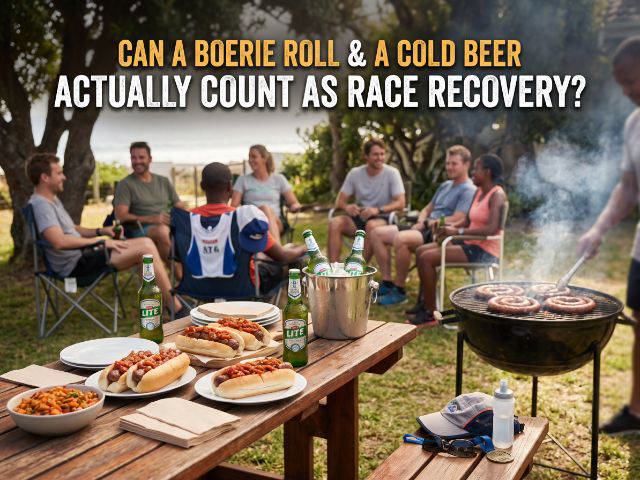
If you are ticking off coastal parkruns and festive trail missions this December, chances are your cooldown routine does not end on a stretching mat, it ends around a sizzling grid with tongs in one hand and an ice-cold drink in the other. Across South Africa, the post-run braai is practically an unofficial fourth discipline, sitting comfortably alongside swim, bike, and run. Yet as sports nutrition gets more dialled-in, plenty of runners and riders find themselves staring at a loaded boerewors roll and a cold Castle Lite, wondering whether they are undoing a morning's worth of honest sweat. The good news is that sports science says you do not have to banish yourself to plain chicken breast and sparkling water while everyone else enjoys the fire, provided you understand what is actually happening inside your body after you cross the finish line.
When you finish a humid summer trail run or a punchy Saturday morning road effort, your tired muscles are basically asking for two things: amino acids to patch up microscopic fibre damage, and carbohydrates to restock depleted energy stores. Looked at through a purely nutritional lens, a classic boerie roll actually ticks more recovery boxes than most athletes give it credit for. Traditional boerewors delivers a solid hit of complete animal protein rich in leucine (a key amino acid that switches on muscle repair) alongside haem iron, zinc, and B-vitamins that endurance athletes burn through in the summer heat. Even that soft white hotdog roll, so often demonised in everyday diet culture, works in your favour right after a hard session because fast-digesting simple carbs replenish muscle glycogen quickly. The only real catch is the saturated fat content. While dietary fat isn't the enemy, especially after a long, energy-draining trail mission, a heavy dose of fat slows down gastric emptying, acting like traffic on the highway that delays how fast those carbs and proteins reach your muscles while bumping up the meal's overall calorie count.
Then comes the cold Castle Lite question. Reaching for a reduced-carb light beer instead of a heavy lager or a sugar-packed cider is already a smart move if you are keeping an eye on total energy intake, and there is no denying the psychological reward of cracking a cold one after a hot morning on the road. Still, human physiology draws a clear line between enjoying a beer and rehydrating with one. Because your body cannot store alcohol, the moment ethanol hits your bloodstream, your liver treats clearing it as priority number one; meaning glycogen restocking, fat burning, and muscle tissue repair all temporarily take a back seat. At the same time, alcohol suppresses your body's anti-diuretic hormone, encouraging fluid loss right when you are trying to replace the sweat you left out on the dunes or tarmac, and even a light beer lacks the sodium and potassium needed to actually pull fluid back into your cells.
Fortunately, you do not have to skip the social ritual that makes South African endurance culture so special; a few small tweaks turn the classic post-race braai into a genuinely solid recovery meal. Start by drinking a full bottle of water mixed with electrolytes before you pop the cap on your first Castle Lite so your fluid and sodium balance is already back on track. When it is time to build your roll, look for a leaner, high-meat-content beef, ostrich, or venison boerewors, let the excess fat drip off over the coals, and pile on tomato-and-onion smoor or chakalaka instead of heavy mayo or creamy sauces for big flavour and antioxidants without unnecessary fats. If you are still hungry, balance out that single boerie roll with lean protein from the grid, like grilled chicken sosaties or steak strips alongside a crisp salad or braaied mielies, and pace your celebratory drinks (or alternate with a zero-alcohol beer) so you wake up fresh for tomorrow's holiday miles.