
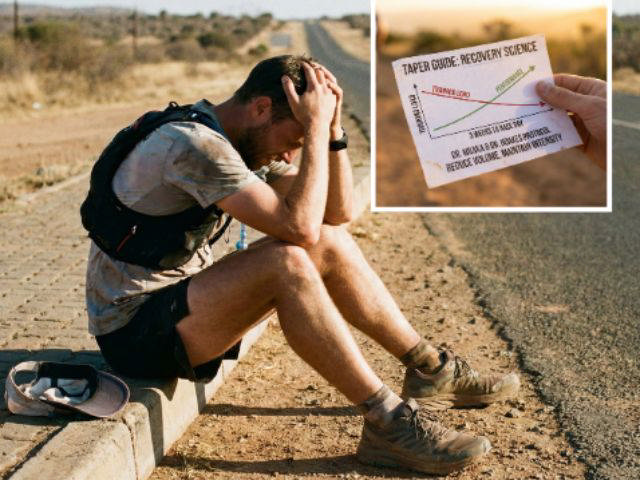
The Peak Performance Paradox: Why 20% of SA Ultra-Runners Are Failing Before the Start Line
By James Baxendale on 28 January 2026
Reading Time: Approximately 5 Minutes
In the high-stakes world of South African ultra-running, the months leading up to our premier events—Comrades, Two Oceans, the Cederberg Traverse—are defined by grit. We applaud the 4:00 AM wake-up calls and the relentless weekend mileage ticking over into the hundreds. We celebrate the "sufferfest."
But there is a silent spectre haunting many training logs in the final month before race day. It is the reason why countless athletes, despite doing all the work, arrive at the start line feeling heavy, flat, and emotionally brittle.
According to observations in South African sports science circles, a staggering statistic has emerged: nearly 1 in 5 South African ultra-marathoners exhibit clear signs of non-functional overreaching or Overtraining Syndrome (OTS) just three weeks before their target race.
This means that 20% of the field is already in a physiological deficit before the gun even fires. They haven't peaked; they have crumbled.
Why does this happen? It is the collision between the fear of "losing fitness" and the physiological necessity of the Taper. Understanding the science of restoring the body is just as vital as understanding the science of breaking it down.
The Science: Overtraining vs. Supercompensation
To understand why the final three weeks are critical, we must distinguish between training fatigue and Overtraining Syndrome.
Training works on the principle of hormesis: you stress the body, cause micro-damage to muscles, deplete fuel stores, and stress the nervous system. Given adequate recovery, the body bounces back not just to baseline, but slightly above baseline. This is called supercompensation. That is how you get fitter.
Overtraining Syndrome occurs when the stress becomes chronic and exceeds the body's recovery capacity for an extended period. It is no longer just "tired legs." It is a neuroendocrine disorder.
Symptoms include persistent fatigue, elevated resting heart rate, sleep disturbances, mood irritability ("taper tantrums" gone wrong), and crucially, a stagnation or decline in performance despite continued training.
The "1 in 5" statistic suggests that many SA runners, driven by the immense demands of events like the 90km Comrades, push their peak mileage too close to race day. They mistake the necessary fatigue of peak training blocks for a permanent state, fearing that resting means detraining.
Science tells us the opposite is true.
The Magic of the Taper
The taper is a systematic reduction in training load before a major competition. It is not "time off." It is a calculated physiological sharpening phase.
According to Dr. Iñigo Mujika, a world-leading exercise physiologist and authority on tapering, the goal of the taper is to maximize physiological gains while minimizing accumulated fatigue. The science is compelling. A well-executed taper can result in a performance improvement of roughly 3% to 6%. In an 8-hour Comrades finish, that is a massive 14 to 28-minute improvement—the difference between a Bill Rowan and a Bronze, or a Silver and just missing the cut.
During a taper, several key physiological processes occur:
If you are still hammering long runs three weeks out, you are actively inhibiting these repair processes. You are digging a hole you will not have time to climb out of.
Case Studies and Professional Protocols
The professional field understood this decades ago.
Consider Bruce Fordyce, the nine-time Comrades King. In the highly active South African running scene of the 80s, where high mileage was a badge of honour, Fordyce was disciplined about his taper. His peak mileage was astronomical, but his drop-off in the final three weeks was precipitous, allowing his body to absorb the months of punishment and arrive in Durban or Pietermaritzburg bursting with energy.
In the modern era, look to Eliud Kipchoge. While a marathoner, his discipline is applicable to ultras. His training group under Patrick Sang is legendary for its gruelling structure. Yet, Kipchoge’s pre-race protocol involves a very strict, mathematically calculated reduction in volume, ensuring he arrives at the Berlin or London start lines completely recovered from the training camp's rigors.
The pros do not taper because they are lazy. They taper because their livelihoods depend on peak performance, and science dictates that recovery is the final ingredient of that peak.
The "Hard Man" Trap
The challenge in South Africa is cultural. We pride ourselves on being tough. There is a pervasive, incorrect belief that tapering is "soft," or that three weeks of lower mileage will undo six months of base work.
It takes approximately 10 to 14 days for the physiological adaptations of a specific workout to fully manifest in your body. Therefore, a gruelling 40km run done two weeks before Comrades will provide almost zero physiological benefit for race day but will contribute significantly to residual fatigue.
If you are part of that 20% showing signs of OTS three weeks out, you must be brave enough to trust the training you have already done. The hay is in the barn. Now you need to stop setting the barn on fire.
To help you navigate this crucial period and avoid the overtraining trap, we have compiled a science-backed tapering guide. Please find the link to the downloadable PDF training guide at the very end of this article. It is designed to help you shed fatigue while keeping your engine sharp.
THE ULTRA-RUNNER’S SCIENTIFIC TAPER GUIDE
Peaking for the Big Day: The Final 21 Days
This guide is built on the principles established by leading sports scientists, including Dr. Iñigo Mujika and Dr. Tim Noakes. The goal is to reduce accumulated fatigue while maintaining the physiological adaptations you worked so hard to gain.
The Golden Rule of Tapering: Reduce Volume drastically, but maintain some Intensity.
You need to rest your body, but you must occasionally remind your neuromuscular system what "race pace" feels like so you don't feel "stale" on race day.
https://drive.google.com/file/d/1MkXh0ipAO3DPKEDBK_dRXBAqpAIAJZHx/view?usp=sharing