
Is Flavour Fatigue Sabotaging Your Gains?
By Lynn Munitich on 13 February 2026
The “Wasabi & White Chocolate” Era: Is Flavour Fatigue Sabotaging Your Gains?
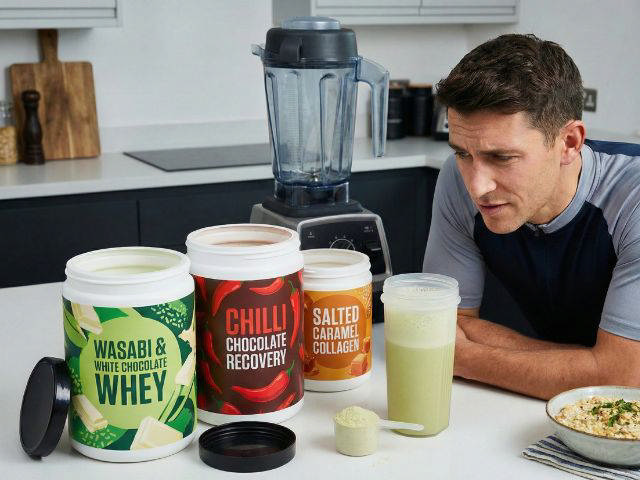
If you told an athlete a decade ago that they’d be choosing between Salted Caramel Collagen and Wasabi White Chocolate Whey, they likely would have laughed mid-shake. Fast forward to 2025, and the protein aisle looks less like a supplement shop and more like a gourmet dessert bar collided with a sushi restaurant. While these "extreme" flavours might seem like marketing gimmicks, they are actually a response to a silent performance killer: flavour fatigue.
The Science of Why We Get Bored
In the world of behavioural science, this is known as sensory-specific satiety. Essentially, when you are repeatedly exposed to the same taste, your desire to consume it plummets—even if your body still needs the nutrients. For endurance athletes training 8–12 hours a week, the repetition is relentless. Between the same routes, the same intervals, and the same syrupy gels, the brain eventually hits a wall.
When your palate is overstimulated by sweetness, you don't necessarily experience a dramatic crash. Instead, you develop a "slow leak" in performance. You might skip a recovery shake because you’re "not in the mood," or cut your mid-ride fuelling short because another strawberry gel feels revolting. This subtle avoidance leads to under-fuelling, which directly slows recovery and adaptation.
Are Weird Flavours Actually Strategic?
While Wasabi White Chocolate sounds bizarre, it might actually be a smart play for compliance. Unconventional or savoury flavours help reduce sweetness overload, making it easier to hit your daily protein targets without the mental resistance. If a "Chilli Chocolate" blend is the only thing that gets you to drink your recovery shake after a long ride, then the novelty has done its job. Performance doesn't care if your protein tastes like dessert or sushi; it only cares that you consume it consistently.
However, athletes must remain vigilant. A wild flavour shouldn't be a distraction from a mediocre formula. Before getting seduced by a limited-edition drop, ensure the product still hits the essential benchmarks:
- 20–30g of protein per serving.
- A leucine threshold of roughly $2.5g$ to trigger muscle protein synthesis.
- Minimal added sugars and artificial fillers.
- Third-party testing for banned substances.
The Shift Toward "Real Food" Palates
Interestingly, 2025 is also seeing a shift toward saltier, whole-food-inspired fuel. Many athletes are moving away from ultra-sweet products in favour of higher sodium blends and savoury on-bike options. After four hours in the saddle, a hit of salt often feels more like a necessity than a luxury.
To combat flavour fatigue without falling for every marketing hype, try rotating 2–3 distinct flavours and keeping at least one "low-sweet" or savoury option in your pantry. Periodically switching brands or incorporating real-food protein like Greek yogurt or eggs can also reset your palate.
Ultimately, we obsess over FTP, VO₂ max, and heart rate zones, but performance often falls apart for a much simpler reason: you just couldn't face another vanilla shake. Your brain’s boredom matters—so if a little "Caramel Crunch Whey" keeps you fuelled, it might not be so crazy after all.